
Chemical Health Risk Assessment (CHRA) by a DOSH-Registered Assessor
OSHMed scopes and coordinates chemical health risk assessments for workplaces across Malaysia under the USECHH Regulations 2000. The CHRA is carried out by a DOSH-registered CHRA assessor, whose name and registration number appear on the report title page. You receive a written report with the risk for each work unit, the controls required, and whether exposure monitoring or medical surveillance is needed.
At a glance
- Regulation
- USECHH Regulations 2000 (P.U. (A) 131/2000)
- Carried out by
- A DOSH-registered CHRA assessor, named on the report title page with their registration number
- Method
- DOSH CHRA Manual, 3rd edition
- Report
- Within one month of completing the assessment (regulation 12)
- Review
- Significant change, more than five years, or DOSH direction (regulation 10)
Does any of these apply to your workplace?
Chemicals hazardous to health in use
Work that may expose employees needs a written CHRA before it starts (regulation 9).
New chemical, process or ventilation
A significant change in the work triggers a review of the assessment (regulation 10).
Five years since the last CHRA
Or DOSH has directed a review, or you cannot find the last report.
No registered assessor on the report
Your current report shows no assessor name or registration number.
What the assessment includes
- Review of your chemical register and safety data sheets (regulation 5)
- Work unit mapping: each job, task or process group that uses or releases chemicals
- Observation of tasks and interviews with workers
- Evaluation of exposure, by inhalation and through the skin
- Assessment of existing controls: local exhaust ventilation, safe work systems and PPE
- Recommendations with action priorities, including whether exposure monitoring or medical surveillance is needed
- Presentation of findings and a signed handover
Some solid and liquid chemicals qualify for the simpler DOSH SiRAC method. The registered assessor confirms the method after reviewing your register.
Typical workplaces
- Manufacturing plants using solvents, paints, adhesives or resins
- Laboratories and workshops
- Cleaning, maintenance and utility work with chemical agents
- Plantations and agriculture using pesticides
USECHH has no general small-quantity exemption. Small amounts may lead to a simpler assessment, but do not remove the need for one.
One visit for several assessments
Many sites also need a noise, chemical or ergonomic assessment. We can scope them together so you plan one series of site visits. Each keeps its own registered assessor and report.
What the CHRA report contains
Prepared for your workplace, with your company name on the cover, following the minimum structure in chapter 11 of the DOSH CHRA Manual.
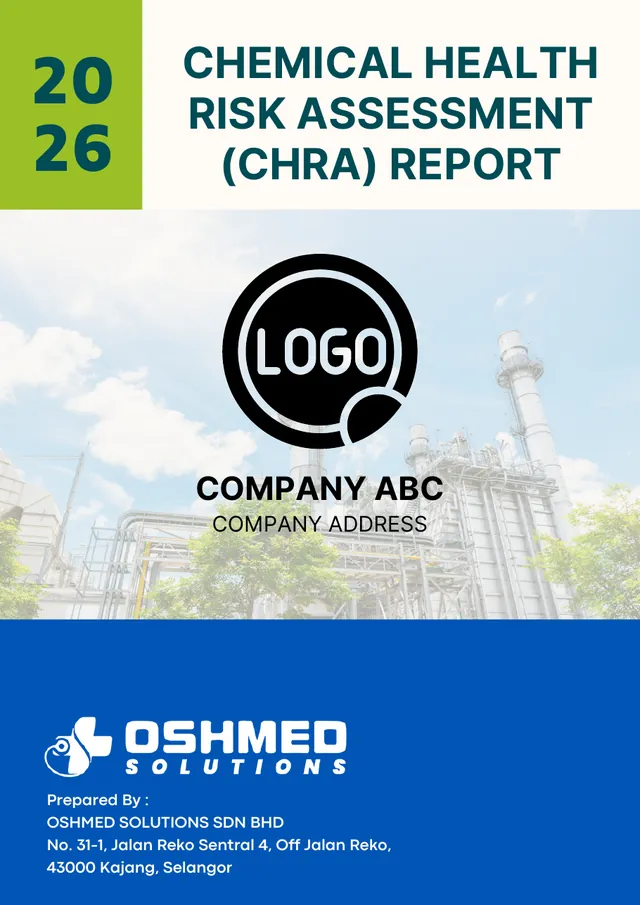
- Title page with the report reference, the assessor’s name and registration number, and your company details
- Executive summary, and a description of processes and work units
- Findings per work unit: level of risk and adequacy of existing controls
- Recommendations with action priorities, including exposure monitoring and medical surveillance
- Appendices: Forms A to D, layout plan, process flowchart and the assessor’s valid competency slip
| Item | Who provides it | Regulation |
|---|---|---|
| Controls such as substitution or local exhaust ventilation | The employer, with suppliers or engineers | 14, 15 |
| Chemical exposure monitoring (CEM), if the CHRA requires it | A DOSH-registered hygiene technician | 26 |
| Medical surveillance, if the CHRA indicates it | A DOSH-registered occupational health doctor | 27 |
| Training on chemical risks | The employer, at least once every two years | 22 |
Prepare before the site visit
- Chemical register with a current safety data sheet for each chemical
- Layout plan and process flowchart
- Headcount per job and shift
- Previous CHRA or exposure monitoring reports, if any
Four steps from enquiry to report
- Send your chemical registerWhatsApp us your list of chemicals, work units, headcount and sites, or the register itself.
- Scope and written quoteWe reply with a written quote that lists the chemicals, work units, sites and deliverables.
- Site assessmentThe registered assessor observes the tasks, interviews workers and checks your controls on site.
- Report and handoverThe report is due within one month of the assessment. The findings are presented, and you act on the required controls within one month of receiving it (regulation 14).
Why employers need it
Questions employers ask before booking
When is a CHRA required in Malaysia?
Before any work that may expose, or is likely to expose, employees to chemicals hazardous to health. Regulation 9 of the USECHH Regulations 2000 requires a written assessment, and regulation 11 requires it to be carried out by an assessor registered with DOSH.
Who can carry out a CHRA?
Only an assessor registered with DOSH (regulation 11). Act 514 section 31B makes it an offence for an unregistered person to do it. OSHMed scopes and coordinates your CHRA, and a DOSH-registered CHRA assessor carries it out.
How do I check that a CHRA assessor is registered?
Ask for the assessor's full name and DOSH registration number, then search for them on the myKKP Competent Person (Individual) lookup linked from DOSH's Approval and Authorization List. Confirm that the registration covers the assessment dates.
How much does a CHRA cost?
There is no official fee. Each quote follows your scope: chemicals in your register, work units, exposed workers, sites, and whether it is a first CHRA or a review. OSHMed quotes in writing.
Does the CHRA include chemical exposure monitoring?
No. The CHRA decides whether monitoring is needed. Chemical exposure monitoring (CEM) is done by a DOSH-registered hygiene technician under regulation 26 and is quoted separately.
How long is a CHRA valid?
USECHH does not use the word "valid", but regulation 10 requires a review when the work changes significantly, when more than five years have passed since the last assessment, or when DOSH directs. Keep every CHRA report for at least 30 years (regulation 13).
Need a CHRA for your workplace?
Send us your chemical register, work units and headcount. We will reply with a written quote and what the assessor needs before the site visit.